Tag: Payment Infrastruture

  • A System Out of Sync with Modern Business Realities 

    A System Out of Sync with Modern Business Realities 

    Cross-border payments infrastructure and global financial systems

    In a world where communication is instant and commerce is increasingly global, moving money across borders should be seamless. It should be fast, transparent, and predictable.

    But it isn’t. Cross-border payments remain one of the least evolved aspects of modern finance, quietly lagging behind the pace of innovation that defines nearly every other part of our digital lives.

    The simplicity of Illusion

    On the surface, sending money internationally feels straightforward. You initiate a transfer, enter the recipient’s details, and expect the funds to arrive.

    What happens next, however, is far from simple.

    Behind the scenes, that ‘single’ transaction moves through a chain of intermediary institutions, each responsible for routing, processing, or settlement. As a result, once currency conversions and compliance checks enter the flow, what appears to be direct quickly becomes a layered, multi-step process. The complexity may not always be visible But its effects are.

    The Hidden Cost of Legacy Systems 

    Much of today’s cross-border payment infrastructure dates back decades, long before the demands of a digital, real-time global economy. As a result, these systems fail to deliver speed or transparency. Instead, they rely on a network of intermediaries that introduce friction at every stage of the transaction.

    The result? Delays that stretch from hours into days, Fees that accumulate across multiple touchpoints, Limited visibility into where money is, and when it will arrive.

    In many cases, users face uncertainty with little control over a process that should be predictable.

    Out of Step with Today’s Financial Reality 
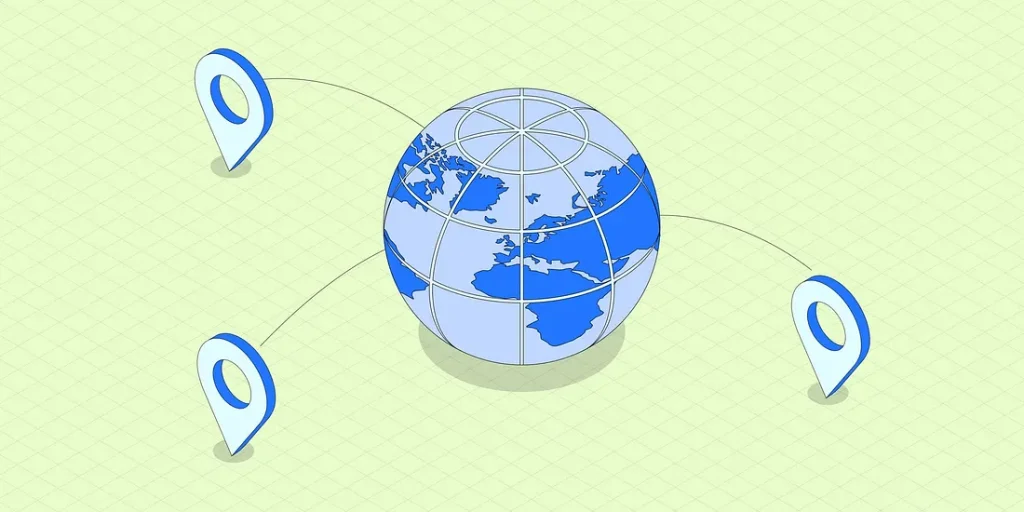
    The disconnect is clear. Businesses operate across continents in real time, and individuals collaborate globally without hesitation. As a result, expectations have shifted, speed and clarity are no longer optional; they are the baseline.

    Yet cross-border payments continue to function as though those expectations don’t exist.

    In 2026, moving money internationally shouldn’t feel slow or uncertain. Instead, it should be direct and predictable, without blind trust in opaque systems or tolerance for inefficiencies.

    Ultimately, global finance must reflect today’s reality, not yesterday’s limitations.

    Rethinking How Money Moves

    Fixing this isn’t about incremental improvements, we need to fundamentally rethink how we design and deliver cross-border payments.

    • This means reducing reliance on unnecessary intermediaries.
    • Improving transparency at every stage of the transaction.
    • Building systems that prioritize speed without compromising reliability.

    At its core, it means simplifying the experience.

    A More Direct Future
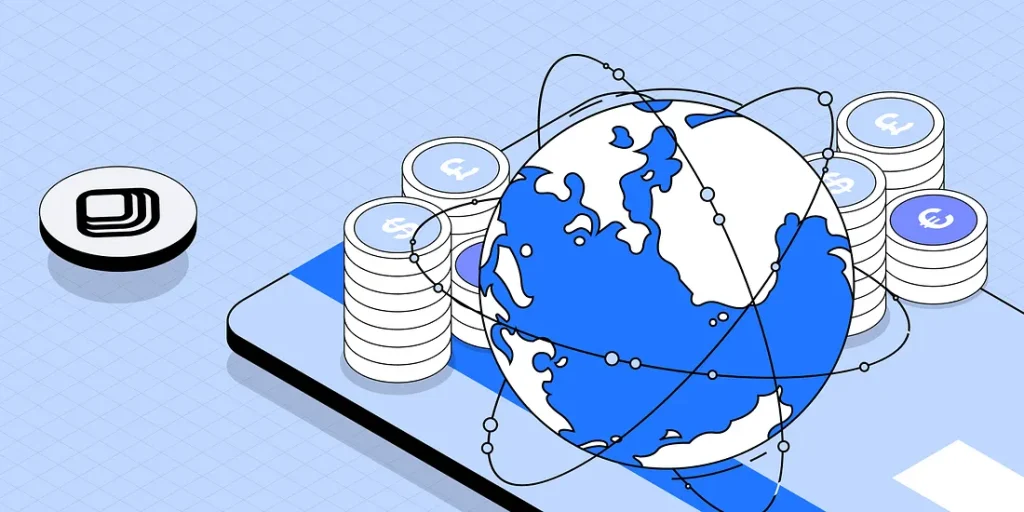
    At Graph Finance, this is the gap we’re focused on closing.

    By streamlining how money moves across borders, we’re removing the friction that has long defined international payments. The goal is not just to make transfers faster, but to make them clearer, more efficient, and more aligned with the needs of a connected global economy.

    Because sending money across borders shouldn’t feel like navigating a maze.

    It should feel direct. It should feel reliable. And above all, it should feel effortless.

    The Standard Going Forward

    The future of cross-border payments is not complicated.

    It is straightforward, efficient, and transparent.

    And it’s long overdue.

    Get started with graph.finance today

  • Finance Teams Are Sitting on Untapped Leverage

    Finance Teams Are Sitting on Untapped Leverage

    Modern finance operations and real-time financial infrastructure

    Here’s What Most Finance Teams Overlook

    Finance teams are responsible for keeping the business financially healthy, tracking performance, approving payments, and ensuring the numbers reconcile. But in many organizations, finance is still positioned as a reporting function rather than a strategic one.

    The real opportunity lies beyond the numbers.

    Too often, teams focus on what’s immediately visible: transactions, reports, and budgets. What gets missed are the structural inefficiencies and untapped insights that could make financial operations faster, more intelligent, and far more influential in business decisions.

    Cross-Border Payments Are More Strategic Than They Appear

    In many companies, international payments are treated as a simple operational task: initiate the payment, confirm the rate, and wait for settlement.

    But behind the scenes, friction adds up.

    Delayed settlements, fragmented banking systems, inconsistent FX pricing, and unexpected intermediary fees quietly affect working capital, supplier relationships, and operational efficiency. What seems like a routine transaction can ultimately influence how quickly a business moves, how suppliers trust it, and how effectively capital is deployed.

    Finance leaders who recognize this shift begin to treat cross-border payments not as a back-office task, but as an operational lever.

    The Shift From Periodic Reporting to Real-Time Finance

    Traditional finance operates on cycles, weekly reports, monthly closes, quarterly analysis.

    The challenge is timing.

    By the time insights appear in a report, the moment to act has often passed. Modern financial infrastructure changes this dynamic. Real-time visibility into transactions, balances, and currency movements allows finance teams to anticipate issues, optimize liquidity, and guide operational decisions as they happen.

    Finance moves from reactive reporting to real-time strategic guidance.

    Automation Is Redefining Operational Efficiency

    Reconciliation remains one of the most time-consuming processes inside finance departments. Matching payments to invoices, verifying settlements, and aligning bank statements can absorb hours of manual work.

    Connected systems and APIs are quietly changing this.

    Automated reconciliation reduces operational friction, minimizes errors, and frees finance teams to focus on higher-value analysis. Instead of spending time validating past transactions, teams can concentrate on forecasting, optimization, and strategic planning.

    Finance Teams That Ask Better Questions Create More Value

    Numbers alone rarely tell the full story.

    The most effective finance teams ask deeper questions:

    • Where are payment delays affecting supplier relationships?
    • Which markets are generating the most efficient cash cycles?
    • Where are foreign exchange movements impacting margins?
    • Which financial processes are slowing down growth?

    Teams that approach finance this way evolve from record-keepers to business advisors.

    The New Role of Finance

    The tools now exist to give finance teams deeper visibility, automation, and operational control than ever before. Yet many organizations still operate with legacy processes that keep finance confined to the back office.

    The teams that adopt modern financial infrastructure gain something more valuable than efficiency.

    They gain clarity, speed, and influence in how the business grows.

    Finance should not just track performance. It should help shape it.

    Discover how modern payment infrastructure can empower your finance team. Learn more at 

    www.graph.finance

  • One Platform. Global Businesses. No Compromise.

    One Platform. Global Businesses. No Compromise.

    Graph is building the financial operating system for businesses scaling beyond borders. All-in-one multi-currency wallet.

    Financial Operations Come With Too Many Moving Parts.

    Picture a fast-growing company, customers in London and Berlin, suppliers in the US and China, and a payroll team in Lagos. Someone is responsible for keeping the company’s money moving, and working. At some companies they’re the founder, at others the head of finance, or whoever runs operations. But ultimately they all face a similar problem.

    They’re reconciling bank accounts across multiple currencies, converting funds on one platform, paying contractors on another, sending supplier invoices, and approving, funding, and tracking team expense requests.

    And all of it is happening across different platforms that aren’t connected to each other. The stack grows. The overhead grows with it.

    Graph is here to change that. One platform where everything above gets handled.

    The Hidden Toll on Global Ambition

    Global commerce is accelerating at an incredible pace. To put that into perspective, cross-border trade is on track to surge from $1.47 trillion in 2025 to $4.81 trillion by 2032.

    Yet the underlying financial infrastructure hasn’t kept up, and as a result, the foundation businesses rely on to move, receive, and manage money across borders remains fragmented and slow. A patchwork of tools and workarounds costs most companies time, money, and missed opportunities, u`sually without anyone noticing.

    Graph was built to keep up with this pace. This isn’t a payment layer or a single solution patched onto whatever you’re already running. All within a single platform that connects every financial operation and makes every currency work smarter, so you can move with the speed and flexibility of a global business.

    One Platform, Multiple Connected Layers

    Graph’s platform has four interlocking layers. Here is exactly how each one works.

    The Account Layer

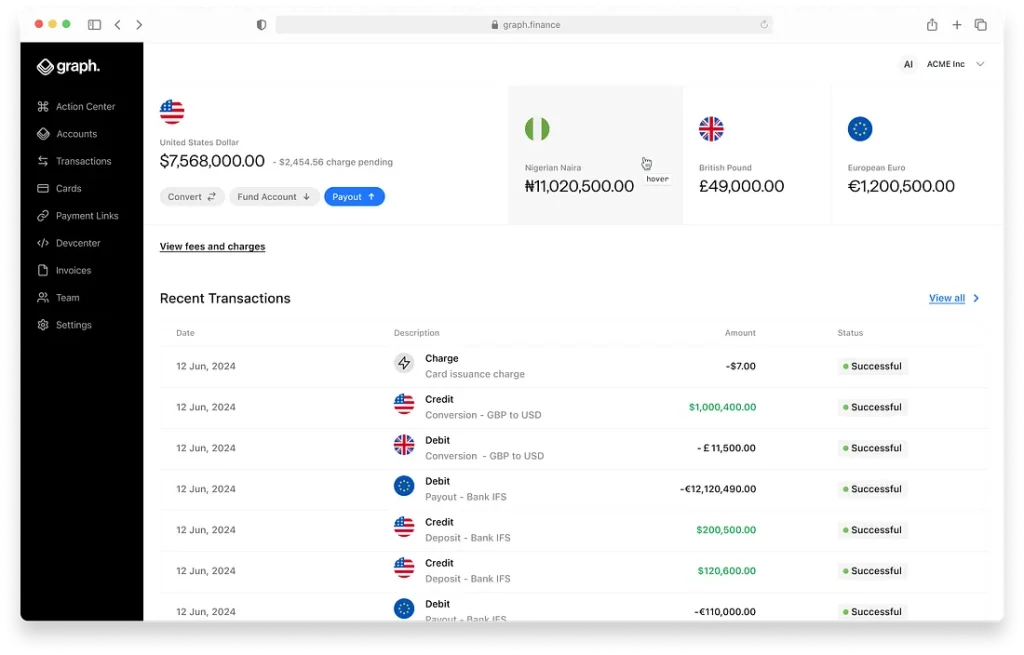
    At the core of the platform are real bank accounts in your business’s name, rather than the typical workarounds, third-party routing, or virtual account numbers that aren’t really yours. Specifically, Graph gives businesses actual USD, EUR, GBP, and NGN accounts. Consequently, this ensures a genuine financial presence in every market, without the overhead of incorporating in each one.”

    When you can hold, receive, and pay in the currencies your counterparties actually use, you eliminate conversion friction at every touchpoint. You price in their local terms, build trust with partners, and stop losing money and opportunities.

    The Operations Layer

    Multi-currency wallets connect directly to your accounts, so your liquidity stays where your day-to-day operations happen. You can hold USD, EUR, GBP, and NGN balances in one place, giving you full visibility across all of them. Then, as funds flow into your accounts, they are instantly reflected in your wallets. Consequently, your money is always ready to be used, converted, or sent at a moment’s notice.

    Invoicing: Create and send invoices in any currency. With this setup, clients can pay using their preferred methods, while built-in tax compliance and a solid paper trail protect your revenue. Ultimately, this ensures your business gets paid smoothly for every service provided.

    Virtual USD Cards: Issue virtual USD cards for your team directly from the platform. Each card draws directly from your USD wallet, while you approve, fund, and track every transaction in real time without leaving the platform. The team gets what they need to spend. You keep full visibility and control over where it goes.

    This is the layer where the business actually operates, receiving funds, managing liquidity, making payments, and staying compliant throughout.

    The Movement Layer

    FX and Conversions: With Graph, you can convert between currencies directly within the platform at real rates. Imagine moving EUR from a client deposit into USD for a supplier payment, or into NGN for a payroll run, all right inside the platform. Consequently, you can bypass external FX brokers and separate tools, thereby eliminating the hidden spreads that typically eat into your margin on every conversion.”

    Payouts: Graph seamlessly converts and routes funds exactly where they need to go. Whether you’re paying USD suppliers in Shenzhen or covering NGN payroll in Lagos, you can do it all without ever switching platforms.

    Graph tracks, confirms, and reconciles every transaction in the same place.

    These two features are what keep the operations layer liquid. Money comes in through the accounts. It lives in the wallets, and then FX moves it across currencies as needed. Payouts move it out to where it needs to go. The whole flow, in, across, and out, happens without leaving the platform.

    The API Layer

    Businesses that run on Graph can also build on Graph. In addition, Graph’s API layer lets businesses embed the same capabilities directly into their own products. This means you can instantly offer accounts, wallets, payments, FX, and payouts to your customers, all without building anything from scratch.”

    The same infrastructure that solves their own operational problem becomes the product they take to their own market.

    What We’re Building Toward

    Today, the world is global. Commerce is global. In fact, teams, suppliers, customers, and ambitions all cross borders daily. Naturally, financial infrastructure should too.

    Because of this, the people from the opening of this article, the ones handling financial operations for their businesses, deserve better. Ultimately, their businesses deserve better. Every business operating across borders deserves a financial system that works with them, not against them.

    That is exactly what Graph is building: a world where, in turn, any business, anywhere, can operate financially as if it were local everywhere.